Ancient Discoveries - Season 3 - Eps 9: Robots
In this scintillating programme, we delve into the mysteries of ancient robots. The ancient world is littered with more references to automatic robotic machines than you might think. The mythical golden robot built by Hephaistos was fabled to roam the island of Crete three times a day, protecting its wealth. Its name was Talos, and it was famously depicted in the 1960s film ‘Jason and the Argonauts’. The gods were also supposed to have been surrounded by self moving ‘tripods’, doors which opened with acoustical signals and anthropomorphic robots. We ask if there is any truth in the amazing and sensational idea that the ancients had robotic devices. We examine the robotic inventions found in the texts of Homer, and compare them with machines known in the ancient world. In antiquity, Heron and Philon were the undisputed champions of robotic invention. We look at three of Philon’s most important automata inventions: the drinking horse machine, the automatic mechanism for supplying water and the automatic serving girl. Philon was working in the third century BC. We ask how he was able to create such marvels over 2000 years ago. We also look at automatic devices masterminded by Heron of Alexandria, such as robotic temple doors and the self-automated theatre. We also scrutinise the Hydraulis, an automatic water organ which was the favoured musical instrument of Emperor Nero. In an amazing discovery in Dion at the foot of Mount Olympia in Greece, the remains of a Hydraulis were found in 1992. Recently, a reconstruction was made of the instrument. It provided music for theatres, festivals and even amphitheatres. Yet the Hydraulis needed somebody to pump a bellows in order to provide an air supply. An automatic air supply was added to the machine in the shape of a small wind mill. A fully automated instrument had been created centuries before its time. For the first time in television history, we attempt to reconstruct the robotic machines of the ceremonial halls of the Byzantine Emperor of 830 AD. A variety of mechanisms were created in order to entertain visiting ambassadors and guests. There are stories of a gold pear tree with singing birds, two lions which roared while twisting their heads, griffins spreading their wings, and several wild animals that surrounded the throne roaring. It is thought these mechanical objects were commissioned by Emperor Theophiles from an unknown goldsmith. These craftsmen worked in the tradition of Heron of Alexandria, carefully crafting a mechanical scene which also contained singing and drinking birds. When the birds drank from a fountain, an owl turned its head towards the birds. There is still conjecture concerning whether these mechanisms operated by hydraulic power, water pressure or steam. Although no robotic human forms are thought to have been created, the ancient world did have self moving mechanical devices. We attempt to reconstruct some of these awe inspiring machines, decisively proving that the ancient engineers and inventors knew how to harness robotic technology 2000 years ago.
About Ancient Discoveries
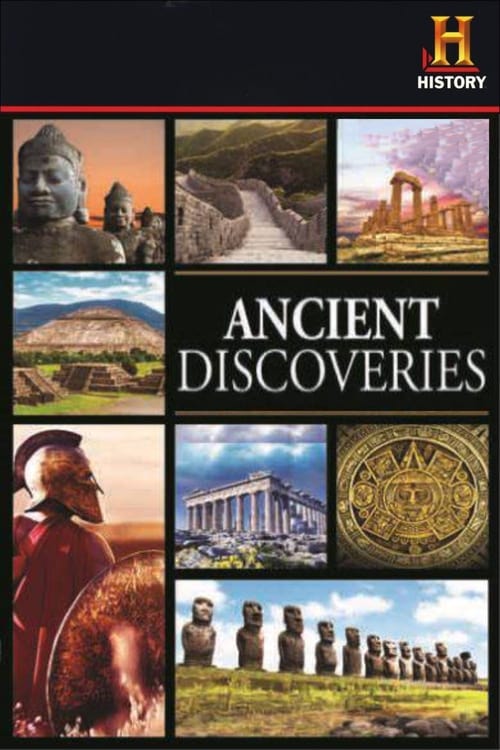
Title: Ancient Discoveries
First Air Date: 2003-12-21
Last Air Date: 2009-12-28
Status: Ended
Rating: 9/10 (from 6 votes)
Language: EN
Seasons: 6
Total Episodes: 42
Network: History
Genres: Documentary
Production Companies: Unknown
Synopsis
Ancient Discoveries was a television series that premiered on December 21, 2003, on The History Channel. The program focused on ancient technologies. The show's theme was that many inventions which are thought to be modern have ancient roots or in some cases may have been lost and then reinvented. The program was a follow-up to a special originally broadcast in 2005 which focused on technologies from the Ancient Roman era such as the Antikythera mechanism and inventors such as Heron of Alexandria. Episodes of the regular series expanded to cover other areas such as Egypt, China and East Asia, and the Islamic world. Ancient Discoveries was made for The History Channel by Wild Dream Films based in Cardiff in the UK. Much of the filming was done on location across the world. The series used contributions from archaeologists and other experts, footage of historical sites and artifacts, computer generated reconstructions and dramatized reconstructions along with experiments and tests on reconstructed artifacts.
Cast
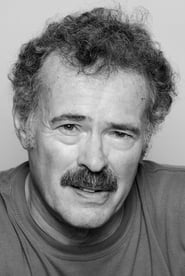
Sean Barrett